PROJECT 03 / Mechanical Design
Pumpkin-Launching Trebuchet
A competition-winning wooden trebuchet engineered within strict size and counterweight constraints to launch a mini pumpkin 174.5 feet.
01 / OVERVIEW
Engineering for maximum distance
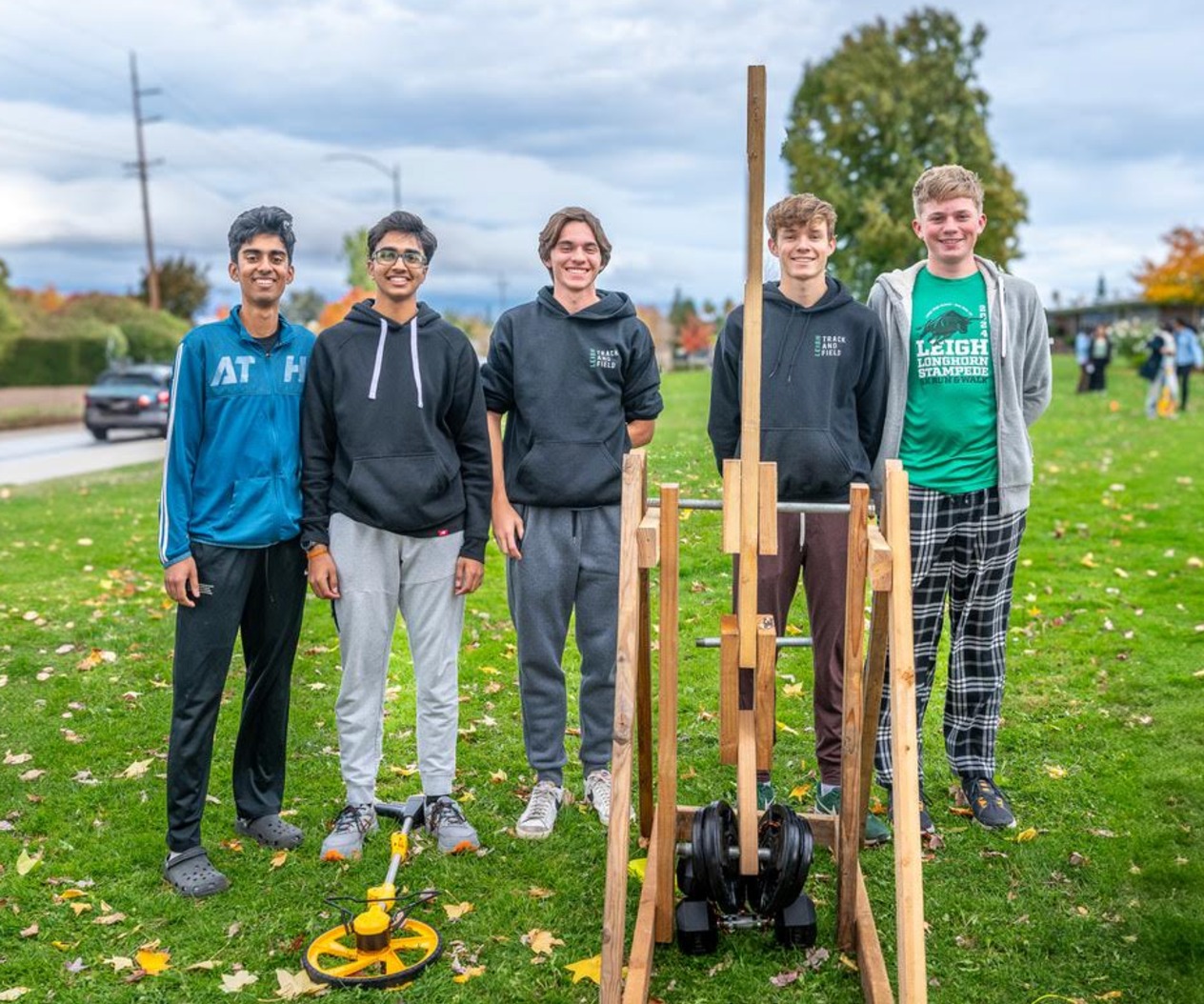
For a schoolwide physics competition, my four teammates and I designed and built a wooden trebuchet to launch a real mini pumpkin as far as possible.
Every member of the team contributed to the design, construction, calculations, testing, and competition launch.
02 / CONSTRAINTS
Designing within strict limits
The trebuchet had to remain under two meters tall when fully extended, use no more than 100 pounds of counterweight, and safely launch a mini pumpkin.
Our finished structure was approximately four feet long, three feet wide, and five feet tall.
These constraints made the project an optimization problem. We needed to maximize range without simply increasing the machine's size or counterweight.
03 / PHYSICS
Turning potential energy into range
We used kinematics and dynamics to guide the design. Our target was a release angle near 45 degrees, balancing vertical airtime with horizontal velocity to maximize range.
We also calculated where to position the counterweight assembly so its gravitational potential energy could be efficiently transferred through the throwing arm and into the projectile.
04 / MECHANICAL DESIGN
A double-swing counterweight
The central feature was a double-swing counterweight system.
Dumbbells and weight plates were mounted so the counterweight could fall more directly downward instead of following a wide arc around the main axle.
The frame and throwing arm were made from wood. Metal rods served as axles, while nails and screws fastened the structure together.
The projectile sat in a sling made from strong cloth and string.
05 / FAILURE & REDESIGN
Rebuilding after the arm broke
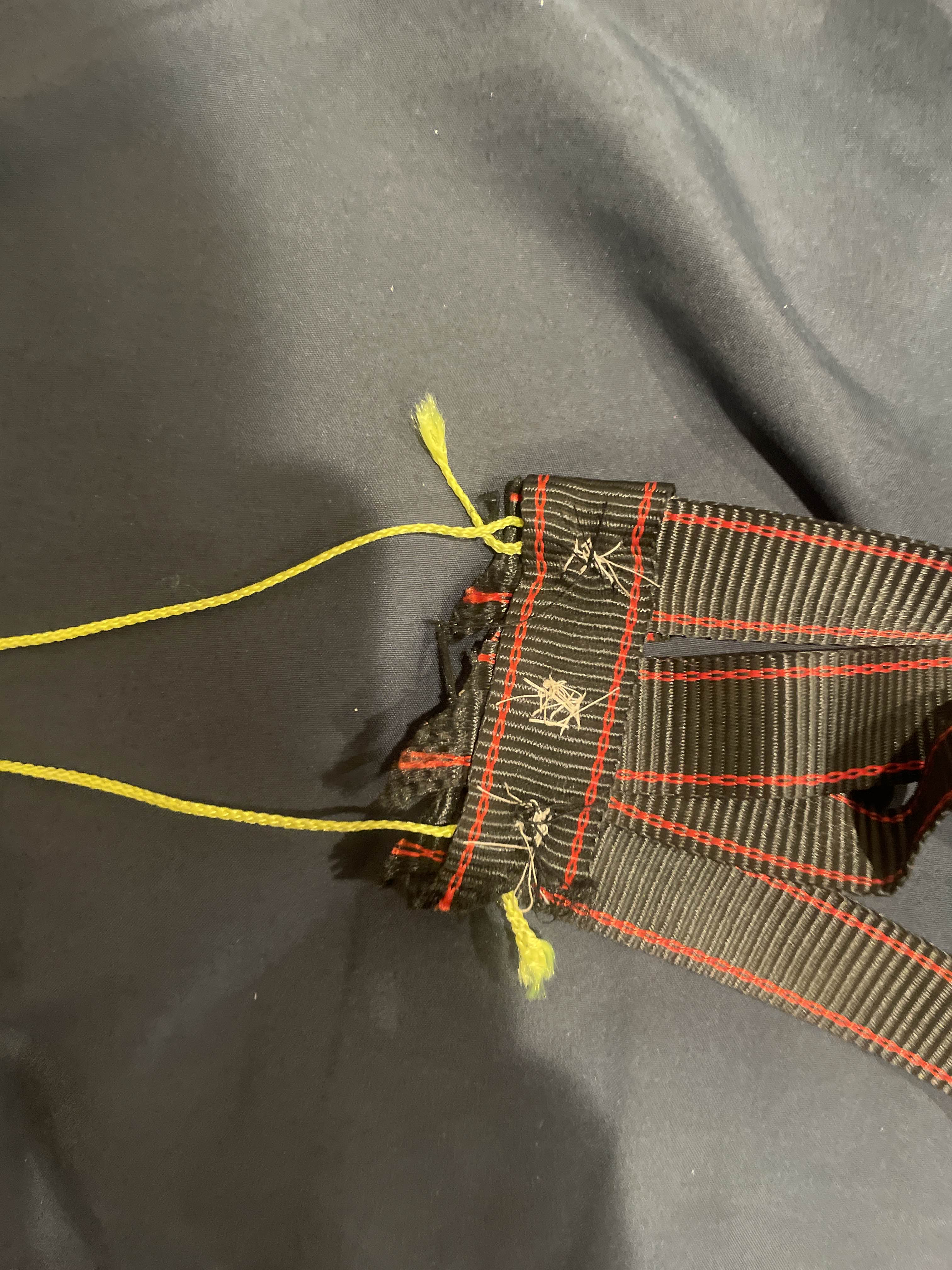
During testing, the forces generated by the counterweight system broke the wooden throwing arm.
The failure showed us where the structure could not withstand the applied load. We rebuilt the arm and continued testing.
This connected our theoretical design to the actual stresses, impacts, and imperfections of a full-scale mechanism.
06 / ITERATION
Optimizing the sling and release
Many launch trials were used to refine the design, although only three launches were recorded.
A major challenge was securing the mini pumpkin in the sling while still allowing it to release cleanly at the correct point in the arm's motion.
Through repeated trial and error, we improved projectile retention, release timing, launch angle, and overall distance.
SELECTED LAUNCH FOOTAGE
Testing to competition day
07 / RESULTS
A competition-winning launch
The final trebuchet launched a mini pumpkin 174.5 feet, earning first place in the schoolwide physics competition.
The distance was more than double the second-place result.
The result validated the complete engineering process: applying physics, building within constraints, learning from structural failure, and using experiments to improve a physical system.
08 / LESSONS
What I learned
This project showed me that successful engineering depends on both analysis and iteration.
Calculations provided a starting point, but testing revealed structural and release problems that could only be understood by operating the full system.
I also gained experience collaborating throughout an open-ended build and making evidence-based changes under fixed design constraints.
PROJECT GALLERY
Design, Launch & Recognition