PROJECT 04 / 3D Modeling
Photogrammetry-Based 3D Reconstruction
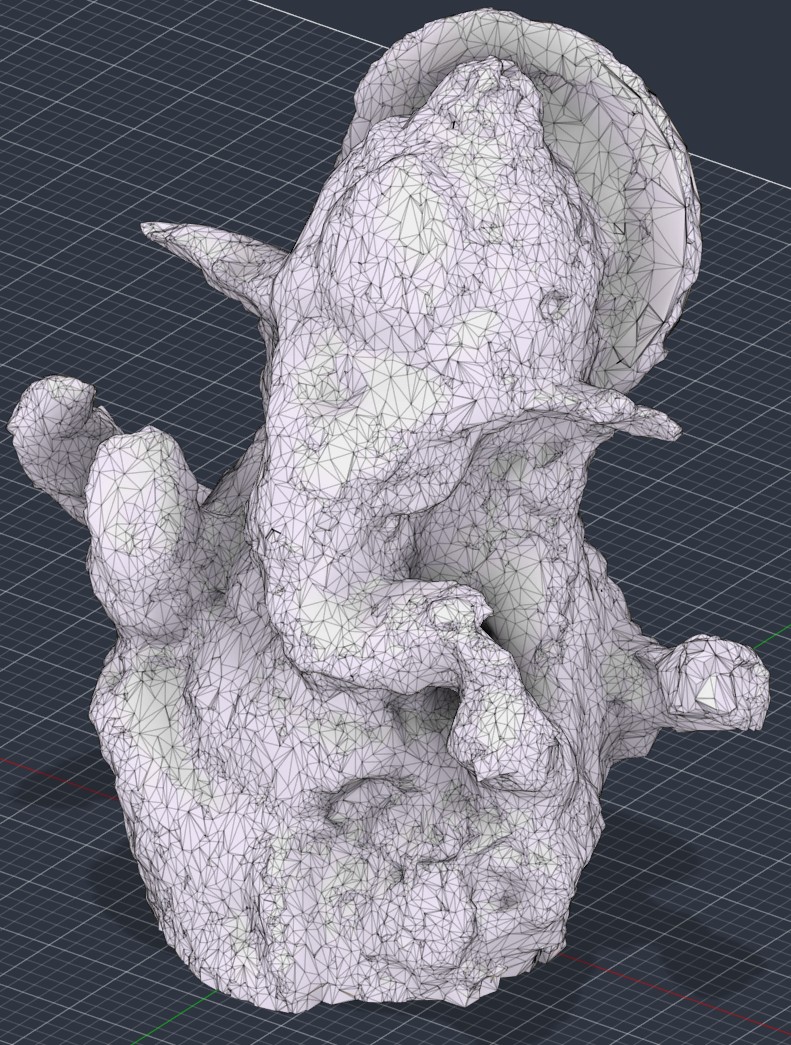
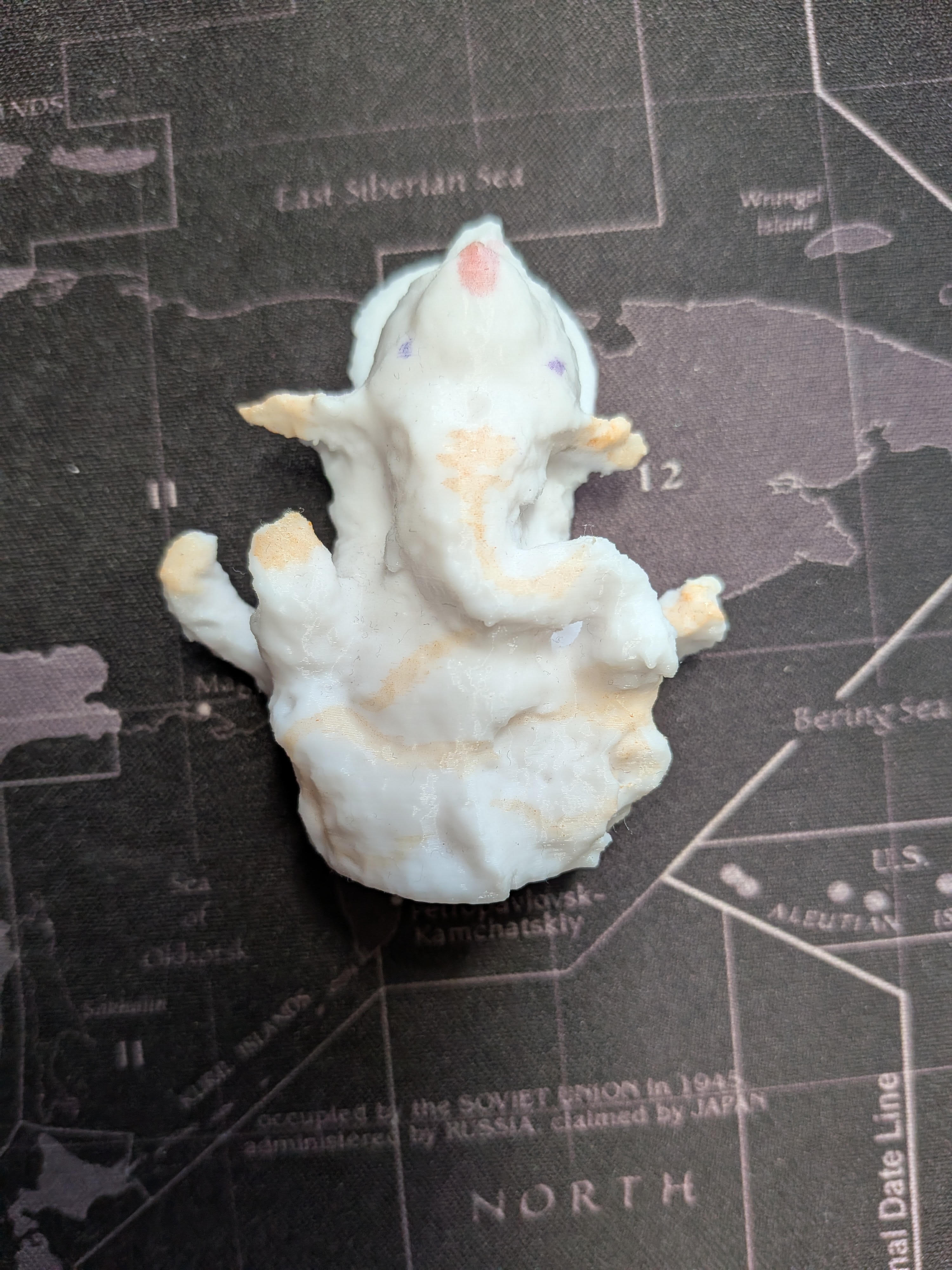
A digital reconstruction of a Lord Ganesha statue created from more than 350 photographs, repaired in Blender, and fabricated as a detailed PLA print.
01 / OVERVIEW
Turning photographs into a physical model
I began this independent project because I was interested in converting ordinary photographs into a detailed three-dimensional model.
I selected a Lord Ganesha statue and developed a complete workflow from image capture to digital reconstruction, mesh repair, and physical printing.
02 / IMAGE CAPTURE
Photographing every angle
I mounted the statue on an elevated surface so I could photograph it from different heights and capture details that would otherwise be difficult to see.
Using my phone camera, I moved around the statue and captured more than 350 overlapping photographs covering its complete 360-degree exterior.
The overlapping images gave the software multiple views of the same features, allowing it to estimate their positions in three-dimensional space.
03 / RECONSTRUCTION
Processing the photographs in Meshroom
I uploaded the full image set into Meshroom, which analyzed matching visual features across the photographs and generated an initial reconstruction.
The first result captured the statue's overall structure, but some viewing angles did not render correctly.
I took adjusted photographs of the problem areas and processed the additional information to improve the reconstruction.
04 / MESH CLEANUP
Repairing the model in Blender
The rough model contained vertices and geometry that did not belong to the statue.
I imported the mesh into Blender and manually removed the incorrect vertices.
Some valid areas were blocked or distorted by the unwanted geometry. After deleting those sections, I added and adjusted vertices where necessary to restore the intended form.
05 / SOLID MESH
Correcting the hollow reconstruction
Blender revealed that the reconstructed mesh was hollow and could not be reliably printed in its initial form.
I manually closed and filled the mesh so it became a printable solid model.
This turned the visual reconstruction into geometry that could be fabricated successfully.
06 / FABRICATION
Producing the physical replica
After cleaning and repairing the model, I prepared it for fabrication and printed it using PLA filament on an Ender 3 S1.
The completed print preserved recognizable details from the source statue along with its overall shape and structure.
Seeing the digital reconstruction become a physical object completed the workflow that originally inspired the project.
07 / RESULTS
A recognizable physical reconstruction
The final result was a recognizable 3D-printed reproduction of the Lord Ganesha statue created from more than 350 phone photographs.
Despite incomplete angles, incorrect vertices, and a hollow initial mesh, I repaired the model while preserving its detailed features and overall structure.
08 / LESSONS
What I learned
This project taught me that photogrammetry depends heavily on image coverage, overlap, and viewing angle. Missing visual information can directly create missing or incorrect geometry.
I also learned that automated reconstruction is only one stage. Producing a usable model required manual inspection, mesh cleanup, geometry repair, and preparation for manufacturing.
Most importantly, I connected photography, computational reconstruction, digital modeling, and physical fabrication in one complete workflow.
PROJECT GALLERY
Digital Reconstruction & Final Print